
What is Kobe Beef ? How it Differs from Wagyu, Taste & Price
What is Kobe Beef ? A Guide from a Kobe Beef Restaurant in Japan
Kobe beef is one of the most famous foods in the world, and also one of the most misunderstood. The name shows up on menus far from Japan, often on meat that has never been near Kobe. So what is Kobe beef?
We are KishoKichi, Japan’s leading Kobe beef specialty restaurant group. We buy whole Kobe beef cattle and serve them at our restaurants in Kobe, Osaka, Tokyo, Kyoto, Hiroshima and Akita. In this guide, we explain what Kobe beef is, the strict standards behind the name, how it differs from wagyu, and how to make sure the Kobe beef you order is the real thing.
What is Kobe Beef ?
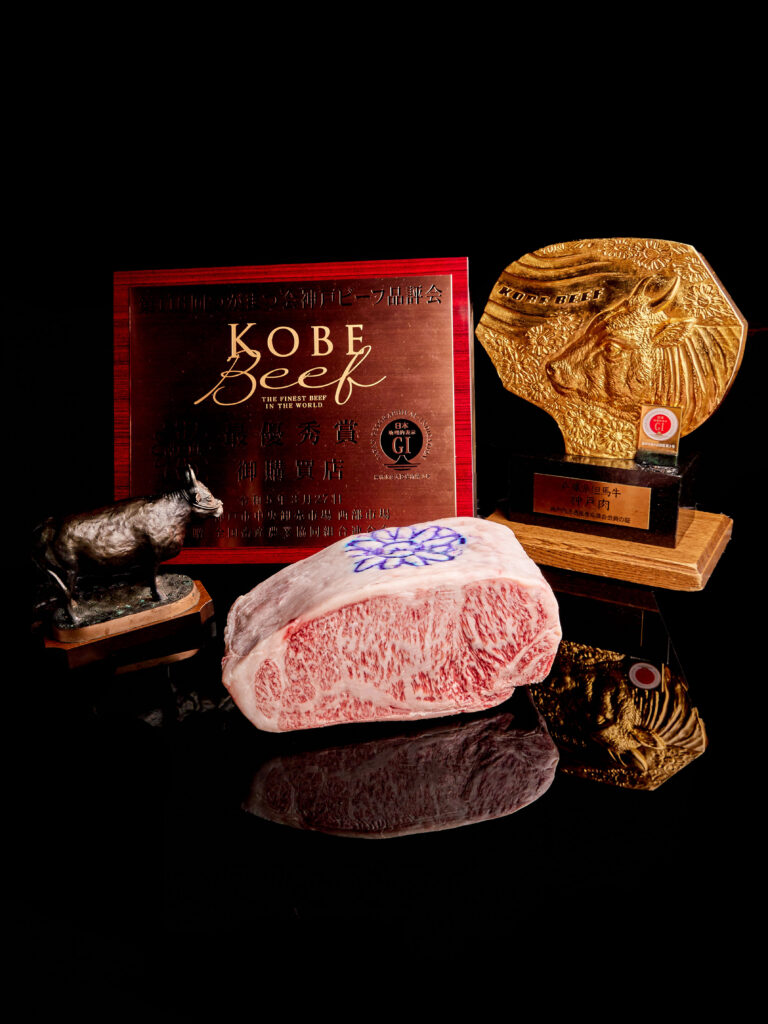
Kobe beef is beef from purebred Tajima cattle that are born, raised and processed in Hyogo Prefecture, Japan, and that pass the grading standards of the Kobe Beef Marketing & Distribution Promotion Association. Known as the “King of Wagyu” and the “King of Marbling,” it is famous for its fine, even marbling.
In short: all Kobe beef is wagyu, but only a very small share of wagyu is Kobe beef.
“Kobe beef” is not a breed, and it is not a cooking style. It is a certified brand name, a little like Champagne for sparkling wine. Only beef that meets every rule can use it. In Japan, “Kobe Beef” is a registered trademark, and certified beef is less than about 0.2% of all beef eaten in the country.
The Official Kobe Beef Standards
Kobe beef certification has two parts: where and how the cattle are raised, and how the quality of the beef scores after processing.
Where and how the cattle are raised:
– Born from the pure Tajima strain of Japanese Black cattle, at a designated breeding farm in Hyogo Prefecture
– Raised and fed by designated farmers in Hyogo Prefecture
– A heifer (a female that has never given birth) or a steer (a castrated bull)
– Processed at a slaughterhouse in Hyogo Prefecture
How the beef must score:
– Marbling (BMS) of No. 6 or higher, on Japan’s 12-point Beef Marbling Standard
– Yield grade of A or B, and quality grade of 4 or higher
– Carcass weight: 270kg〜 for heifers, 300–499.9 kg for steers
– Fine meat texture and excellent firmness
Every calf gets an ear tag with a 10-digit ID number when it is born. With this number, you can trace the cow’s bloodline, the farm where it was born and raised, and the market where it was sold. Beef that passes is stamped with a Japanese chrysanthemum (nojigiku), the official mark of Kobe beef.
The number of certified cattle changes every year. In fiscal 2024, 7,330 cattle were certified as Tajima beef, and 6,820 of them were certified as Kobe beef.
A note on “A5”: Japanese beef is graded from A to C for yield and from 1 to 5 for quality, and A5 is the highest grade. You will often see Kobe beef described as A5, but Kobe beef needs a BMS of 6 or higher, so not all Kobe beef is A5. At KishoKichi, every piece of Kobe beef we serve is A5.
A Brief History of Kobe Beef
Cattle arrived in Japan from the Asian mainland around the 2nd century AD. For most of Japan’s history, they were work animals that pulled plows and carried loads. For cultural and religious reasons, most people did not eat beef.
The Tajima region in northern Hyogo is mountainous and was cut off from other areas. Farmers there kept their cattle’s bloodline pure for generations, and Tajima cattle became known for fine, well-marbled meat.
Things changed in 1868, when the port of Kobe opened to foreign trade. Western residents and sailors began eating local Tajima beef, and they called it “Kobe beef” after the port. The name spread around the world from there.
The Kobe Beef Marketing & Distribution Promotion Association was set up in 1983 to protect the brand and define what could be called Kobe beef. Kobe beef was first exported in 2012, and it can now be found in a limited number of countries.
Kobe Beef vs. Wagyu: What’s the Difference?
“Wagyu” translates as “Japanese cattle” (wa = Japanese, gyu = cattle), but it does not mean any beef from Japan. Under the labeling guidelines of Japan’s Ministry of Agriculture, Forestry and Fisheries (MAFF), only beef from four native Japanese breeds, and crosses between these breeds, can be labeled wagyu. The cattle must also be born and raised in Japan, and their breed and history must be confirmed through Japan’s cattle registry and traceability system.
The four wagyu breeds are:
– Japanese Black: the most marbling, and more than 90% of all wagyu. Kobe, Matsusaka and Omi beef all come from Japanese Black cattle.
– Japanese Brown: leaner, with a milder flavor
– Japanese Shorthorn: very lean, with a strong beef taste
– Japanese Polled: very rare, even in Japan
Japan has other famous wagyu brands, such as Matsusaka beef from Mie Prefecture and Omi beef from Shiga Prefecture. Kobe beef is the best known outside Japan.
What about American wagyu? In the United States, “wagyu” usually means cattle crossbred from Japanese wagyu and other breeds such as Angus. American wagyu often has more marbling than USDA Prime, but it is a different product from Japanese wagyu, and it is never Kobe beef. The same goes for “Kobe-style” or “American Kobe” beef: these names are marketing terms, not certifications.
What Does Kobe Beef Taste Like?
The first thing people notice is the texture. The fine white marbling runs all through the meat, and the fat melts at a low temperature, so a bite of Kobe beef steak feels soft and melts in your mouth. The flavor is rich and slightly sweet, with a clean aroma.
Our guests tell us this every day. KishoKichi Group restaurants received more than 25,000 English-language reviews over the past year, and “melts in your mouth” is one of the phrases guests use most. Guests have also described the beef as “buttery and light,” and “incredibly soft, buttery, and rich without feeling heavy.”
That last point matters. Good Kobe beef fat tastes rich, not greasy. The flavor also changes from cut to cut, so menus that let you compare several cuts side by side are especially popular.
How to Tell If It’s Real Kobe Beef
Because the name is so valuable, fake “Kobe beef” is common around the world. Here’s how to check.
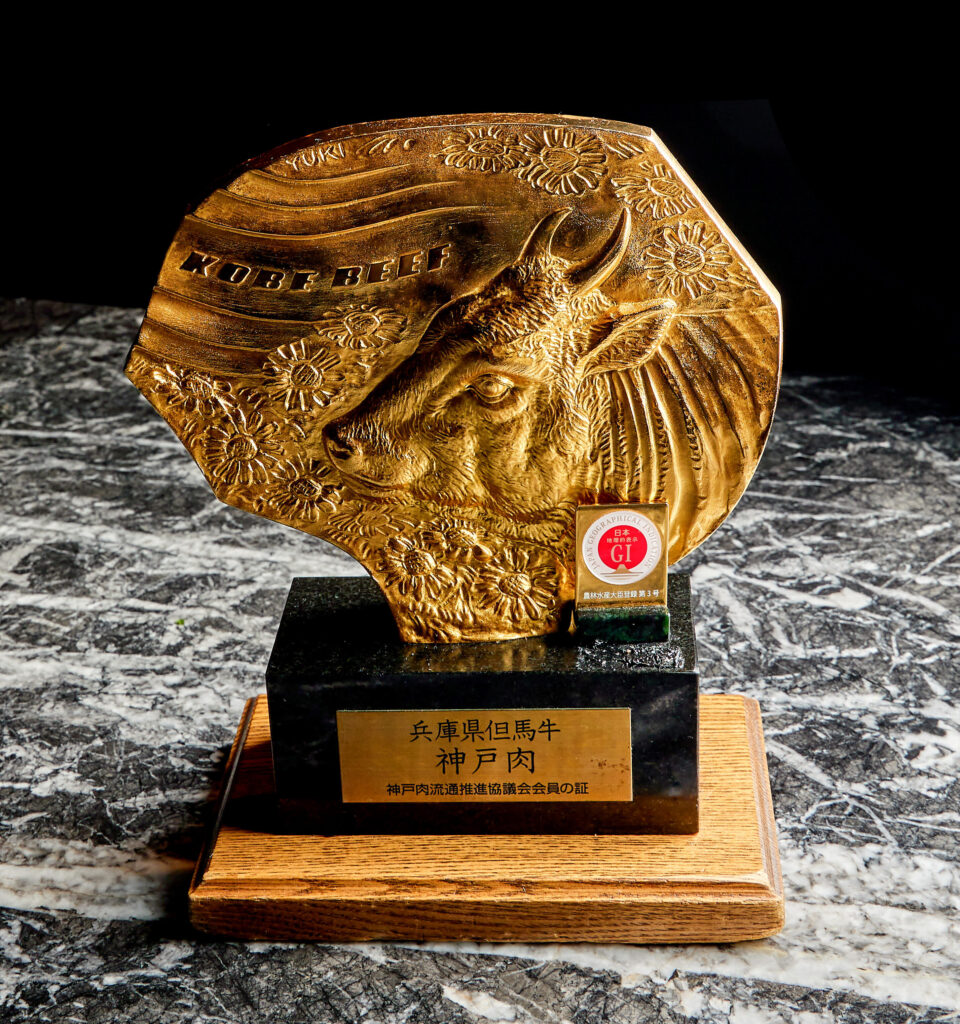
1. Look for the bronze statue. Stores and restaurants that are officially allowed to buy and sell Kobe beef are “designated stores.” They display a bronze statue of a Tajima cow, along with a certificate from the Association.
2. Ask for the 10-digit ID number. Real Kobe beef can be traced to a single animal. A genuine seller can show you the number, and you can look it up on the Association’s website.
KishoKichi is a Kobe Beef Designated Store. Our bronze statue is on display, Many of our guests take a photo with it.
How Much Does Kobe Beef Cost?
Kobe beef is one of the most expensive types of beef in the world. The reasons are simple: there is very little of it, the cattle are raised for at least 28 months, and each animal must pass strict grading.
Kobe beef is usually cheaper in Japan than overseas, because it doesn’t have to be exported and is sold closer to where it is produced. If you want to try it, Japan is the best place to do so.
Why can KishoKichi keep prices lower? We buy whole cattle instead of individual cuts. More on that below.
Why KishoKichi Buys Whole Kobe Beef Cattle
Most restaurants buy Kobe beef by the cut from a wholesaler. KishoKichi buys whole cattle, a practice called ittō-gai (“buying the whole animal”).
After we buy the cattle, our own team does all of the cutting, trimming and fat removal. This lets us use every part of the animal with very little waste, so we can offer A5 Kobe beef at a more reasonable price. Buying whole cattle also means we can offer rare cuts that most restaurants never see.
In total, KishoKichi buys roughly one in ten of all certified Kobe beef cattle. Every year, the Kobe Beef Marketing & Distribution Promotion Association recognizes KishoKichi for serving the most Kobe beef to consumers. KishoKichi Restaurant Group is serving more Kobe Beef than any other restaurant group in the world.
The Best Ways to Eat Kobe Beef in Japan
For your first time, we recommend a steak, cooked on a teppan (iron griddle) in front of you. It is the simplest way to taste the beef itself. Each cut has its own character and its own best doneness:
– Sirloin: fine marbling, with sweetness, aroma and tenderness all in one. It is the most popular cut at our restaurants. Recommended: medium-rare.
– Fillet: the most tender cut. It is so soft that it falls apart without much chewing. Recommended: rare.
– Chateaubriand: the thick center of the fillet, and very rare. It has the finest tenderness of all. Recommended: medium-rare.
Try the first bite with just a little salt. If you prefer leaner beef, ask about lean cuts.
Kobe beef is also delicious in other Japanese dishes:
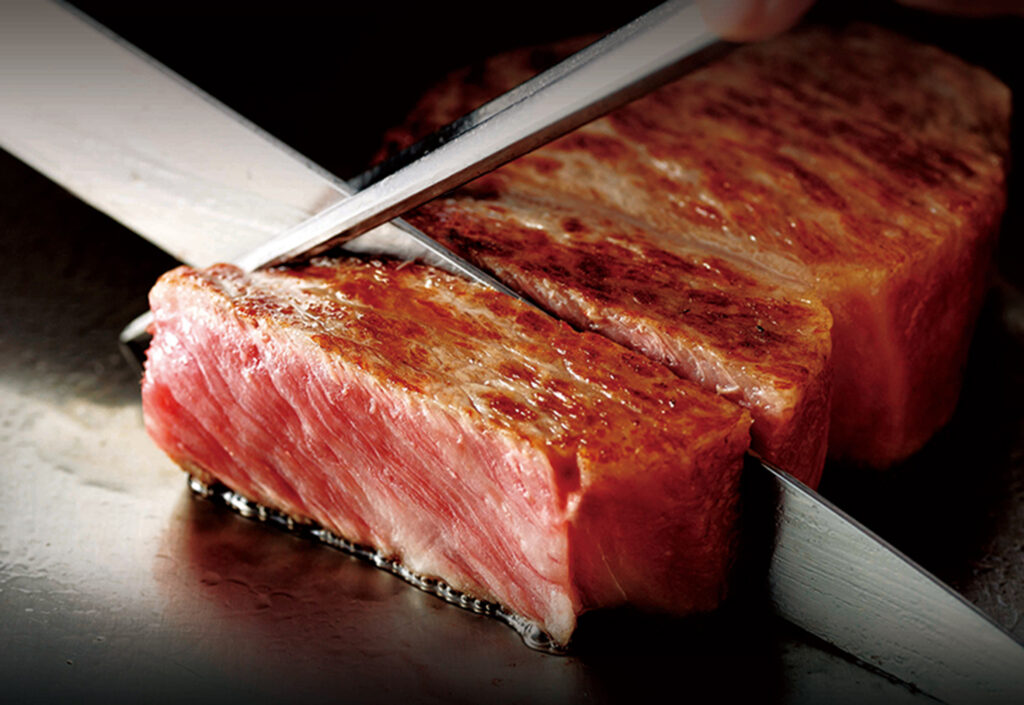
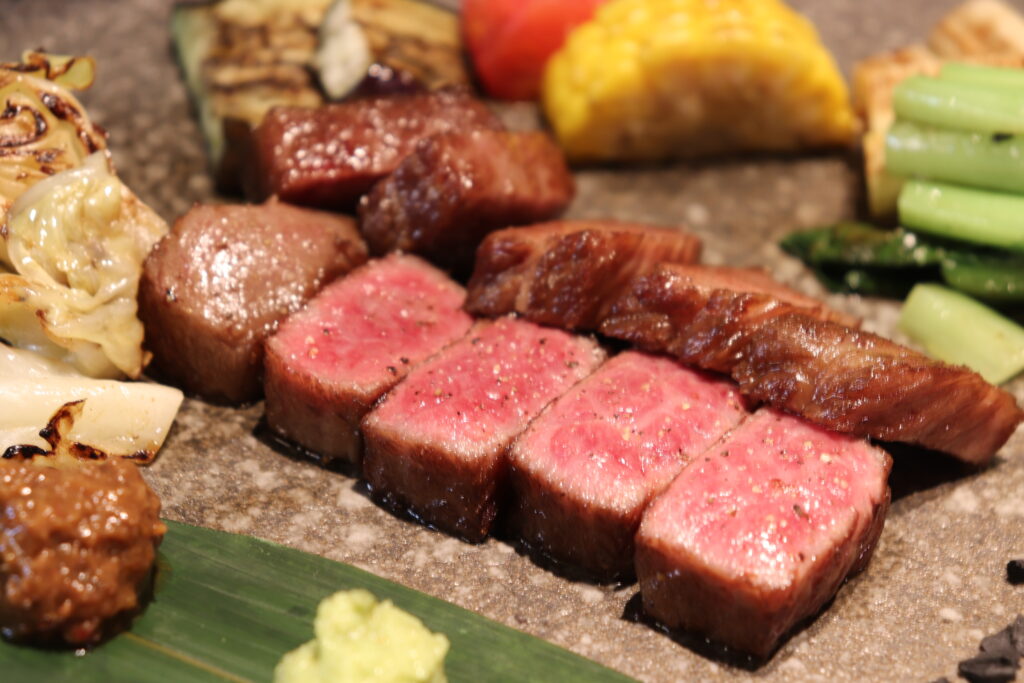
– Teppanyaki: steak and vegetables cooked on an iron griddle, often with garlic fried rice
– Yakiniku: Japanese-style BBQ where you grill the meat yourself at the table.
– Kobe beef steak ju (beef over rice): a medium-rare Kobe beef steak served over rice in a traditional lacquered box
– Sukiyaki: thin slices cooked in a sweet soy broth and dipped in raw egg
– Shabu-shabu: thin slices swished in hot broth
– Ramen: a rich soup made 100% from Kobe beef bones simmered with Hyogo vegetables, topped with Kobe beef chashu (Kishokichi Style)
Experience Authentic Kobe Beef at KishoKichi
Top-Grade Kobe Beef: we serve only the highest grade of Kobe beef (A5 rank), one of Japan’s finest wagyu brands. KishoKichi is a Kobe Beef Designated Store. We buy whole Cattle and cut every piece ourselves. Our restaurants in Kobe, Osaka, Tokyo, Kyoto, Hiroshima and Akita serve steak, teppanyaki, yakiniku, steak ju, sukiyaki, shabu-shabu, ramen and more. Many of our chefs and staff speak English.
FAQ
Q. Is all Kobe beef A5?
A. No. Certified Kobe beef requires a marbling score (BMS, Beef Marbling Standard) of 6 or higher, and A5 generally means BMS 8 or higher. So some Kobe beef is graded A4. All of the Kobe beef served at KishoKichi is A5.
Q. Is Kobe beef the same as wagyu?
A. Kobe beef is one type of wagyu, but not all wagyu is Kobe beef. Kobe beef is Tajima cattle raised in Hyogo Prefecture that meet strict certification standards.
Q. Why is Kobe beef so expensive?
A. Production is very limited — only 6,820 cattle were certified in fiscal 2024. The cattle are also raised for a long time, and each one must meet strict certification standards. Exporting adds costs such as shipping, so Kobe beef is generally more affordable to enjoy in Japan than overseas.