
Top-Grade Kobe Beef
What is Kobe Beef?
Kobe Beef is a beef brand awarded only to carefully selected Tajima cattle at the time of shipment.
There is no such thing as a “living” Kobe Beef cattle
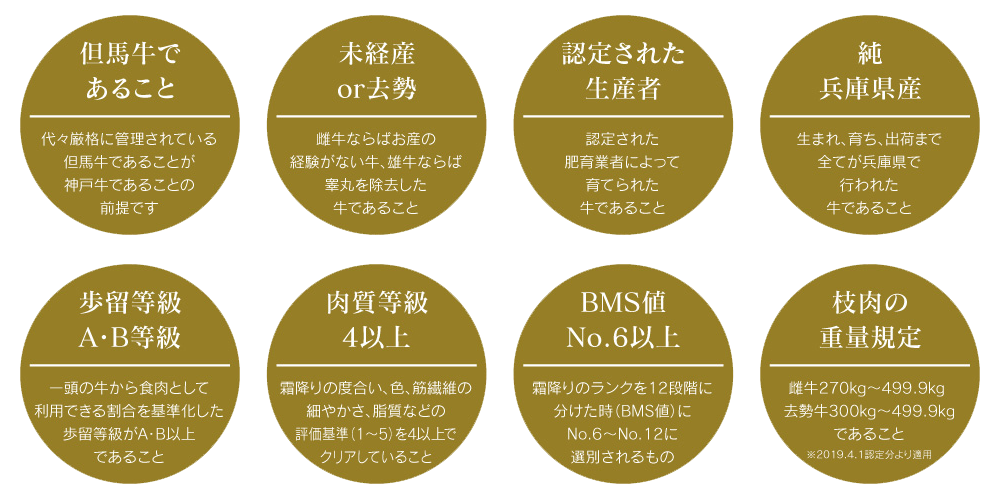
Kobe Beef (also known as “Kobe Gyu” or “Kobe Niku”) is an honorary title awarded by the Kobe Beef Marketing & Distribution Promotion Association to Tajima cattle that meet strict standards regarding their rearing environment, pedigree, and meat quality at the time of shipment.
Tajima cattle are purebred cattle from Hyogo Prefecture that have maintained their pure bloodline for generations.
What is Tajima Cattle, the Origin of Kobe Beef?
Tajima cattle refers to cattle from Hyogo Prefecture that have maintained a pure bloodline since the Edo period, raised within Hyogo Prefecture by registered producers designated by the Kobe Beef Marketing & Distribution Promotion Association, shipped to meat processing centers in Hyogo Prefecture between 28 and 60 months of age, and graded “A” or “B” in meat yield. Thanks to their excellent bloodline and meticulously managed rearing environment, Tajima cattle have fine muscle fibers that readily develop marbling, producing an exceptionally tender texture and rich mellowness. Beyond Kobe Beef, Tajima cattle are also raised as foundation stock for other premium beef brands such as Matsusaka Beef.
Among Japan’s three great Wagyu brands, Kobe Beef is the Tajima cattle that has passed the strictest evaluation standards.
Kobe Beef = Tajima Cattle That Has Cleared the World’s Strictest Standards
As mentioned above, only cattle that clear an even stricter set of criteria added on top of the already rigorous Tajima cattle standards are permitted to bear the name “Kobe Beef (Kobe Gyu, Kobe Niku).” Among Japan’s three great Wagyu brands—Kobe Beef, Matsusaka Beef, and Omi Beef—Kobe Beef maintains the strictest evaluation standards, and in 2009 it was featured by American and other international media as one of the nine most expensive foods in the world.
In Europe, “Kobe Beef” is known simply as a term for “delicious beef.”
Kobe Beef, Recognized Around the World
Beef that has cleared such strict standards naturally enjoys high recognition overseas as well. Particularly in Europe and the United States, the name “KOBE BEEF” has become synonymous with the pinnacle of beef quality. In Europe, the term has become so associated with “delicious beef” that beef falsely labeled “KOBE” has even entered circulation, leading some people to mistakenly believe “KOBE” refers to a breed of cattle rather than a place name.
“Kobe Beef” Has Been Registered Under Japan’s National GI (Geographical Indication) System
Kobe Beef, Recognized in Japan
In December 2015, “Kobe Beef,” together with “Tajima Cattle,” became the only beef cattle brands to receive national certification protecting, as intellectual property, a name whose quality and characteristics are tied to its place of origin—aimed at enhancing producer profits and consumer trust. With this nationally led registration, the reputation of Kobe Beef is expected to spread even further.
In terms of quality, Kobe Beef stands far above other premium beef brands.
Kobe Beef, the World’s Finest Beef
With a solid tradition and history, and having cleared the world’s strictest evaluation standards, Kobe Beef stands far above other beef brands renowned for their quality. Please try it for yourself—we are confident it will exceed every expectation.
The World’s Strictest Kobe Beef Standards
The Secret to Its Exquisite Flavor
The Key Is Its Beautiful Pink Cross-Section!
The Key to Flavor Is Fine, Delicate Marbling
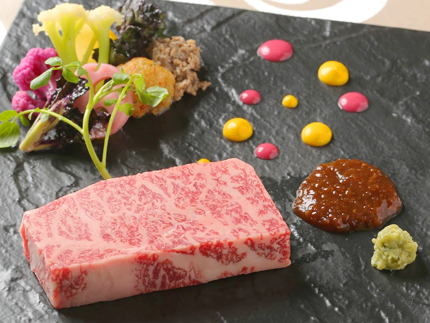
Above all, the appeal of Kobe Beef lies in its “sweetness” and “aroma.” Supported by the pure Tajima cattle bloodline of Hyogo Prefecture, its fine, melt-in-the-mouth texture is characterized by a long, lingering sweetness and presence on the palate. The fat’s remarkably low melting point—said to be as low as 14°C(57.2°F)—combined with its fine marbling, creates an exquisite, melting richness. The oleic acid content in its fat, a key contributor to umami, is also at a level far surpassing other Wagyu breeds. Backed by scientific evidence, this exceptional flavor truly lives up to its reputation as the world’s finest branded beef.
The Crowning Touch Is Meticulous Care and Devotion!
Pedigree Determines the Meat Quality, Feed Determines the Flavor
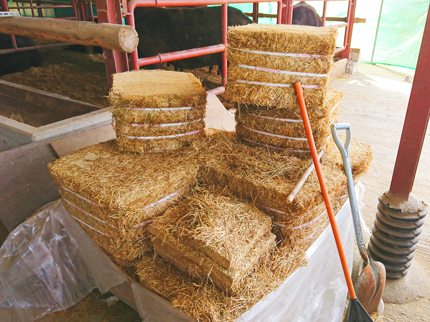
The raising of Kobe Beef begins with participating in calf auctions. However, achieving the finest “meat quality” and “flavor” requires far more than simply acquiring excellent calves. It is essential to provide a stress-free environment surrounded by rich nature, along with premium feed and meticulous, individualized care for each animal. The Tajima region, where Kobe Beef cattle are raised, is naturally blessed with beautiful water and clean air. The cold air flowing in from the Sea of Japan during winter also helps firm the meat just the right amount while promoting the beautifully fine marbling. Feed formulas are also carefully controlled by each producing farm according to each animal’s growth stage and daily health condition. The Nakanishi Ranch Group, a leading name in Kobe Beef production that consistently achieves top-tier gradings, has traveled overseas dozens of times in search of the ideal feed. Their answer: pasture grass grown under contract by American farmers, with the blend adjusted individually for each animal.
The Distribution of Kobe Beef
Look for the Nojigiku Seal!
Rigorous Distribution Control, Maintained to the Very End
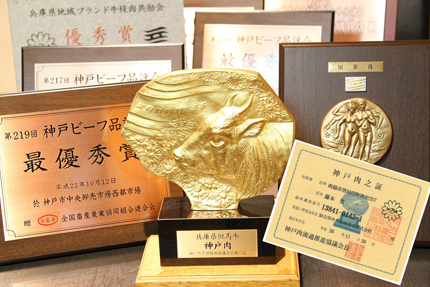
Built upon the pride of a bloodline preserved by generations of predecessors and the tireless effort behind its rearing, Kobe Beef is thoroughly selected through an extremely rigorous evaluation process—and its distribution, once sold at auction, is checked just as strictly. After grading at one of Hyogo Prefecture’s five meat markets and slaughterhouses, carcasses certified as Kobe Beef are stamped with the “Nojigiku Seal” at four locations, and their quality is further certified by a “Kobe Beef Certificate” issued for each individual animal. Kobe Beef also has three registered word trademarks, and only products that have received both the Nojigiku Seal and the Kobe Beef Certificate are permitted to bear the names “Kobe Beef,” “Kobe Gyu,” or “Kobe Niku” in subsequent distribution. In addition, designated Kobe Beef retailers display a bronze monument, clearly identifying themselves as handlers of authentic Kobe Beef—ensuring that consumers can enjoy its flavor and value with complete peace of mind.
Information on Each Individual Animal Is Also Made Public!
Protecting and Passing On the Kobe Beef Brand
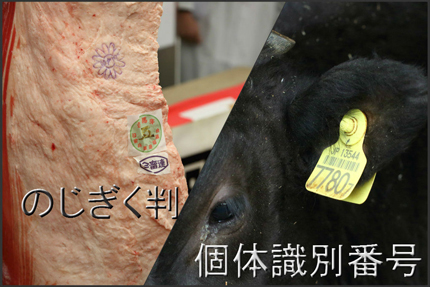
While the Kobe Beef distribution system is now quite well established, the definition of “Kobe Beef” was not nearly as clear until around the mid-1970s to 1980s. In other words, there was not yet a sufficient means of certifying “Kobe Beef.” To prevent confusion among consumers and industry stakeholders, the Kobe Beef Marketing & Distribution Promotion Association was established in 1983. It was founded with the cooperation of Tajima cattle producers, the meat distribution industry, and consumers, with three goals: to clarify the definition of Kobe Beef, to designate authorized retailers and producers, and to clearly indicate to consumers which stores handle authentic Kobe Beef. It was also from this organization’s founding that the Nojigiku Seal and Kobe Beef Certificate came into use as proof of authenticity. In 2007, the association registered a regional collective trademark, establishing a designated registration system covering everyone from breeding and production farms to retailers. Today, the individual identification information displayed at retailers and restaurants allows consumers to view detailed information about each animal, including its pedigree, the farm where it was raised, its point of sale, and its grading. Various ongoing efforts continue to this day to ensure the safe and reliable delivery of authentic Kobe Beef.
The Processing of Kobe Beef
Is Kobe Beef Really “Expensive”?
A 400kg Cow Yields Only About 200kg of Meat
Naturally, not all of a carcass sold for several million yen ends up on the market as-is. Since a carcass includes bone, sinew, and fat, these are first carefully removed by specialized processors, and the meat is then cut into individual sections such as filet, loin, and sirloin. As a result, the edible portion is significantly reduced—for example, a 400kg carcass may yield only around 200kg of usable meat in the end. Even by simple calculation, this means the meat is worth over ¥10,000 per kilogram. Of course, quality varies by cut, and premium cuts such as filet command an even higher price. Many people have the impression that “Kobe Beef is expensive,” but when you consider the tremendous effort and care involved from raising the cattle to bringing the meat to your table, we hope this gives you a fuller understanding of why.
Understanding the Cuts of Kobe Beef
What Are “Rare Cuts”?
Rare Cuts Made Possible by Whole-Carcass Purchasing
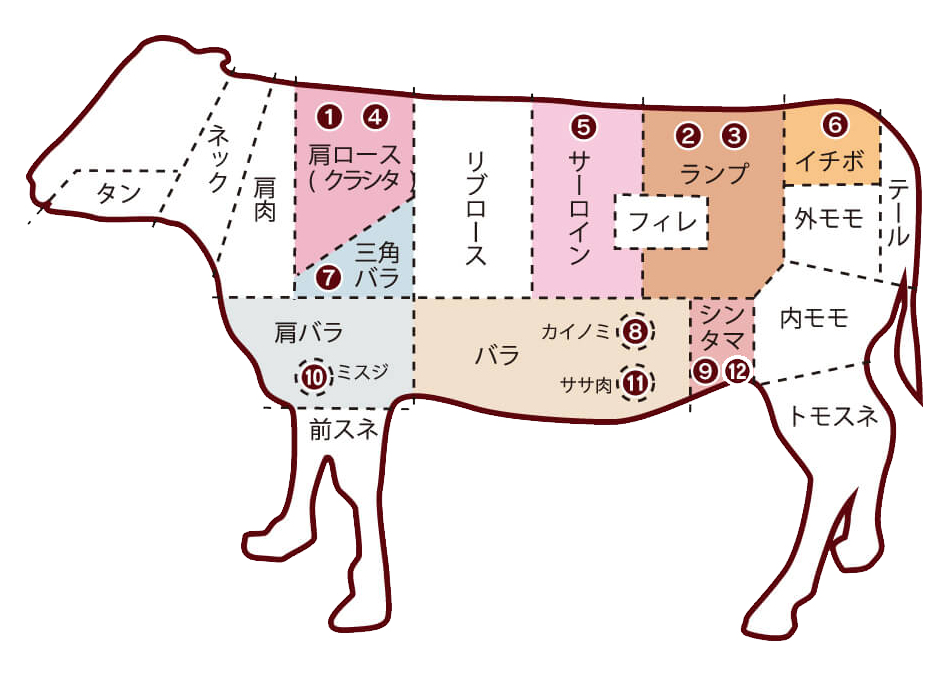
Even within the same animal, the texture and quality of the meat vary by cut. For example, when dining at a yakiniku restaurant, you may have noticed the wide variety of menu items such as “Karubi” and “Loin”—all beef, yet each distinctly different. In recent years, particular attention has been drawn to what are called “rare cuts”: portions of which only a small amount can be obtained from a single animal. “Zabuton” and “Tsurami” are among the better-known examples, but there are many other varieties as well, which we would like to introduce here.
What Is a Designated Kobe Beef Retailer?
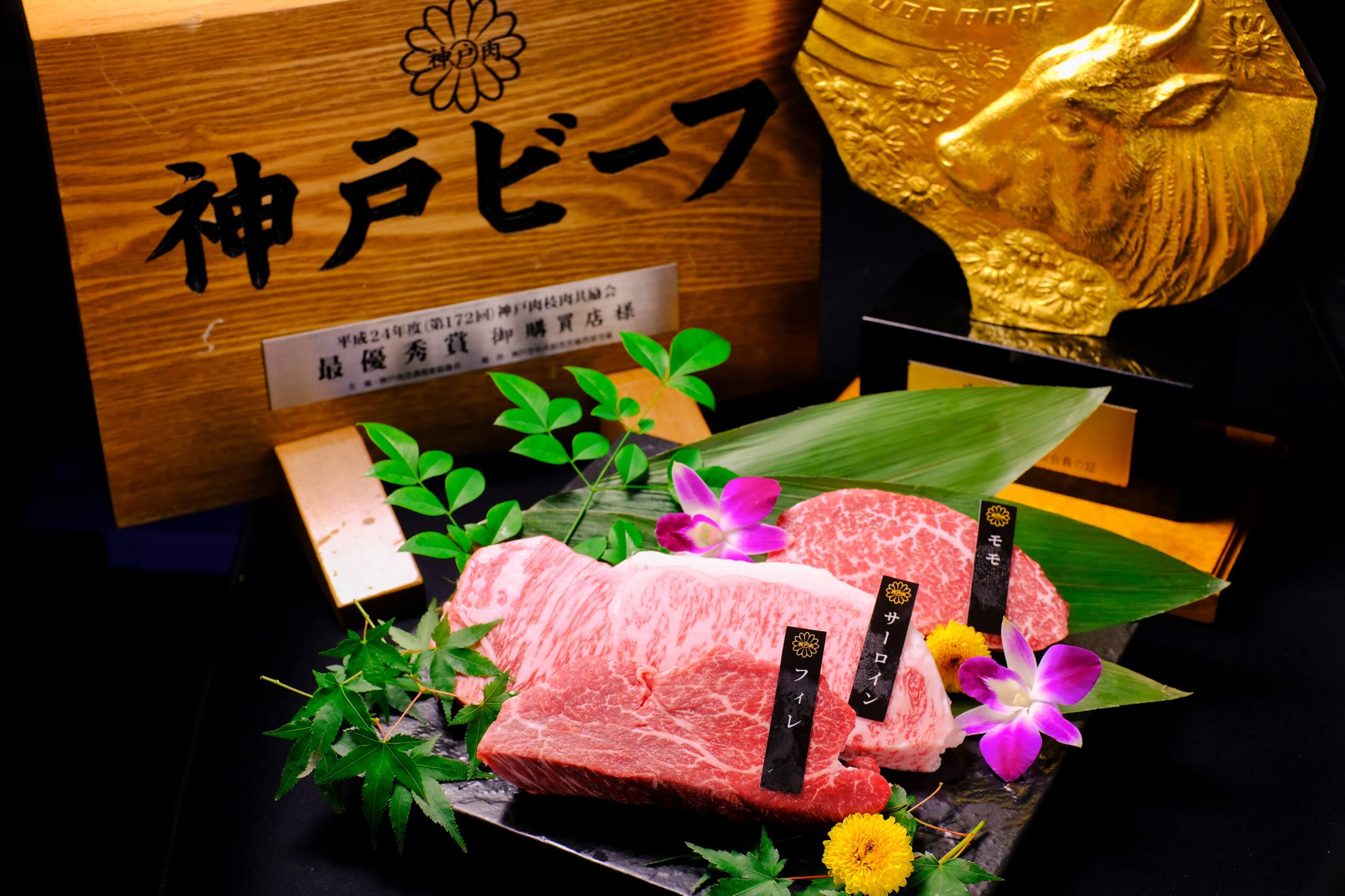
In 2007, the Kobe Beef Marketing & Distribution Promotion Association registered a regional collective trademark, establishing a designated registration system covering everyone from breeding and production farms to retailers. Wholesalers, retailers, and restaurants display membership certificates, designation certificates, and bronze statues at their storefronts.
We Support the Kobe Beef Brand
Our Customers Are Also Part of Supporting the Kobe Beef Brand
Having encountered Kobe Beef and come to understand its depth and value, Kishō Kichi has built its business around the core belief that our mission is to convey the wonder and appeal of Kobe Beef to as many people as possible. Today, we operate a total of 48 Kobe Beef specialty restaurants (as of October 2019): 30 in the Motomachi/Sannomiya area, 17 in the Osaka Namba/Shinsaibashi area, and 1 in the Fukuoka area. Kobe Beef is a brand built and maintained through the dedicated efforts of Hyogo Prefecture as a whole, involving producers, distributors, butchers, restaurants, and consumers alike. We at the Kishō Kichi Group believe that what we can do to help uphold the safety, security, and high quality shared by everyone involved in this brand is to accurately convey the true value of Kobe Beef.
Why a Specialty Restaurant?
To uphold all of the above, it is absolutely essential to maintain a constant, waste-free consumption cycle. As a Kobe Beef specialty restaurant group, Kishō Kichi has built a system that ensures the stable, waste-free consumption of an entire animal by operating multiple restaurants that exclusively serve 100% Kobe Beef. We believe that this stable, waste-free consumption creates a sustainable cycle for Kobe Beef—one that allows us to provide our customers with safe, secure, high-quality Kobe Beef, while also giving producers the confidence to continue their dedicated work raising the next generation of Kobe Beef cattle.
Going forward, the Kishō Kichi Group will continue to dedicate ourselves, as a Kobe Beef specialty restaurant group, to accurately conveying the true nature and value of Kobe Beef to as many people as possible. We sincerely appreciate your continued understanding and support.